
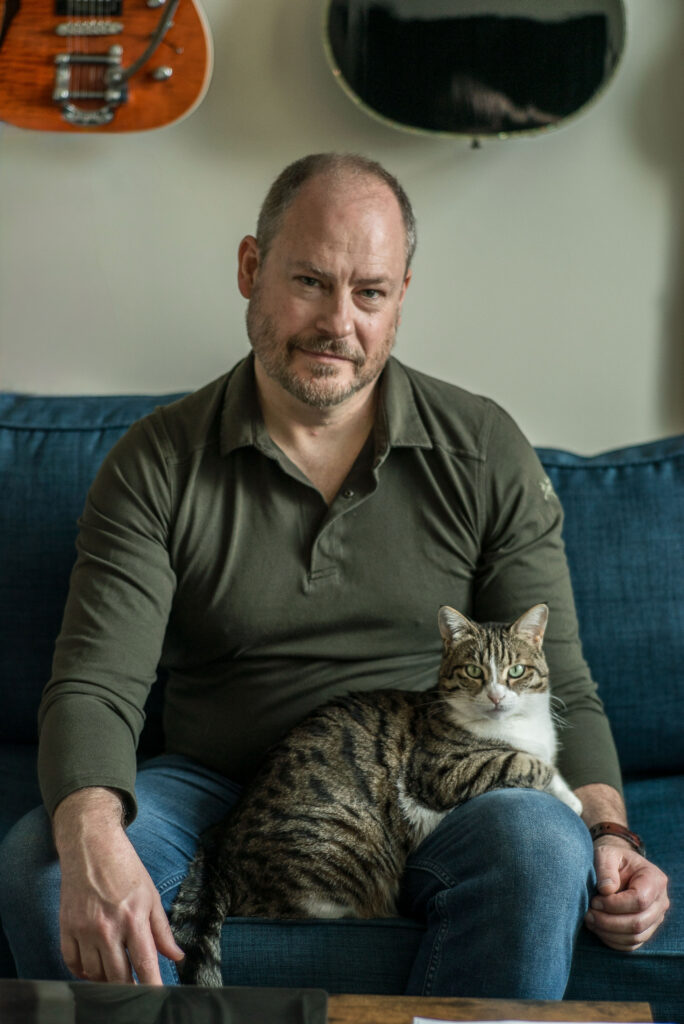
 Sean D. Carberry is a cross between Agent Gibbs, Col. Jack O’Neill, and Dr. House, except not quite as smart, witty, good looking, or insubordinate as any of them.
His life path is that of a Roomba—he has been a multifamily mortgage banker,recording engineer, teacher, political consultant, government official, and award-winning war correspondent.
His most recent journalisticgig was managing editor of National Defense, and on and off in his spare time he’s the Roy Kent of foreign policy analysis and commentary on Substack.
From 2007 through 2014,Sean traveled the world reporting from war zones and fragile states for public radio. He spent time in Iraq, Syria, Yemen, Libya, Congo, Colombia, Kosovo, and Sudan and other roughneighborhoods before settling down in Afghanistan in 2012. There, he served as NPR’s Kabul correspondent until the end of 2014 when NPR closedthe bureau.
His quest to become a correspondent in Afghanistan began in the months after 9/11 when he was a producer for“The Connection” at WBUR in Boston. In that role, he would spend mornings calling satellite phones in Afghanistan to get on-the-ground correspondents on the show. The pictures those reporters painted captivated him. Heknew he had to see it all himself.
The path to get there would be long and unconventional. He detoured from journalism into a brief stint as a political campaign managerand then went to the Harvard Kennedy School to earn a master’s degree in public administration.
After a summer writing papers on governance and political reform in the Middle East at the Dubai School of Government, he returned to Boston and WBUR as a Swiss Army Knife. He produced coverage of the 2006 elections, a documentary report onpublic higher education in Massachusetts, and produced and reported as part of the tiger team that developed the program “Radio Boston.”
In the summer of 2007, after life dealt him a series of body blows, he moved to Washington, D.C., and joined the international affairs radio program, “America Abroad.” After four years of traveling the world and winning awards for that program, he beamed to the mothership as international producer for NPR, and a year later took over the Kabul bureau. 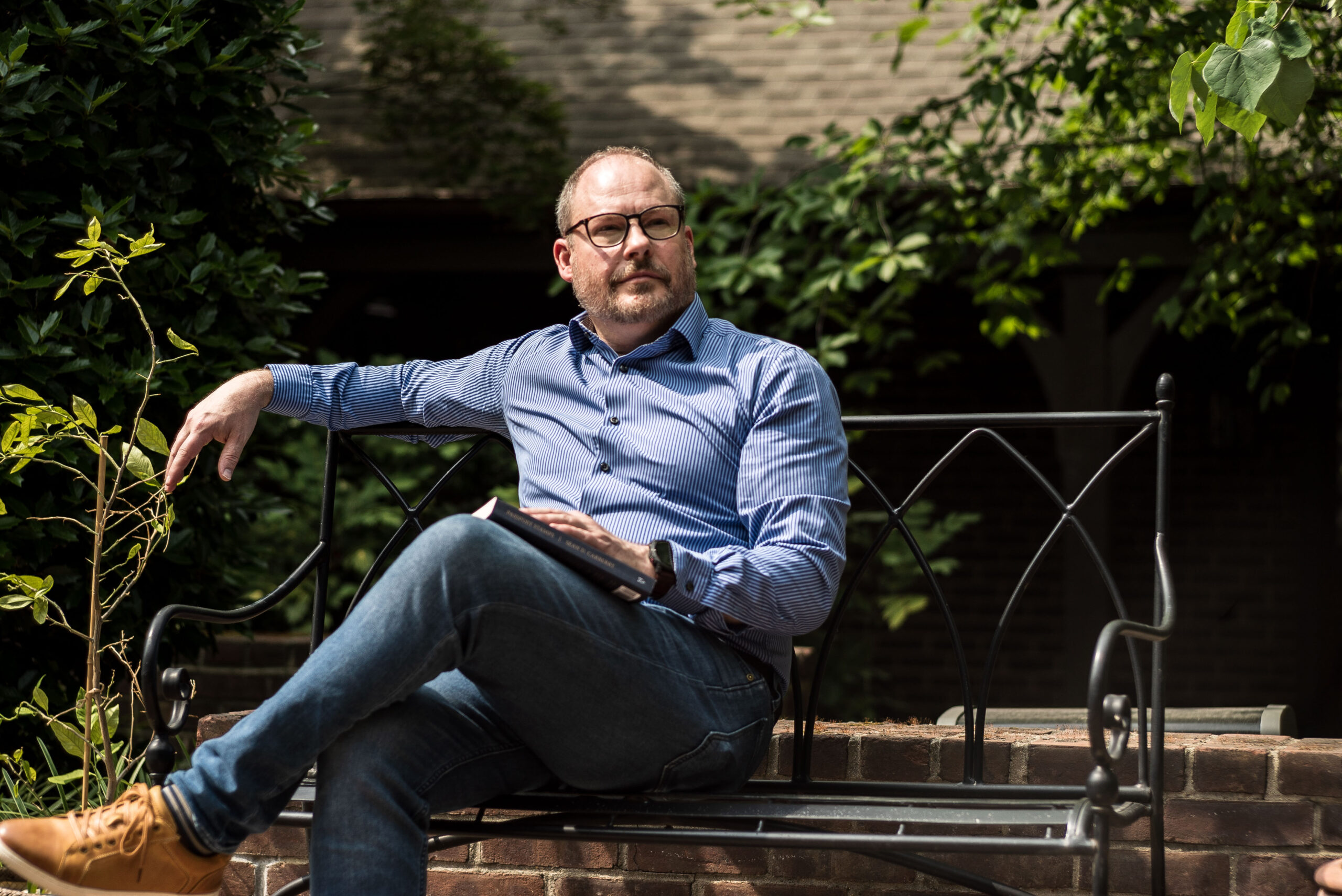
After his time in Afghanistan ended, things got weird. Professionally, he thrived in roles at Reuters, Federal Computer Week, the Defense Department Office of Inspector General, and National Defense.
His personal life, however, did not fare as well. Unrecognized and untreated PTSD, and other lingering effects from years of experiencing the worst of humanity left him vulnerable to the wiles of the wrong places and the wrong people—casinos and an abusive relationship.
Where Passport Stamps recounts his journey into and out of conflict journalism, Doubling Down picks up at the end of that journey and recounts the years spent as a casino high roller and the creeping ruin that entailed.